
Categories
Concord New HampshirePublished March 10, 2026
Buying Waterfront Property in Concord, NH: 3 Shoreland Rules Every Buyer Should Know

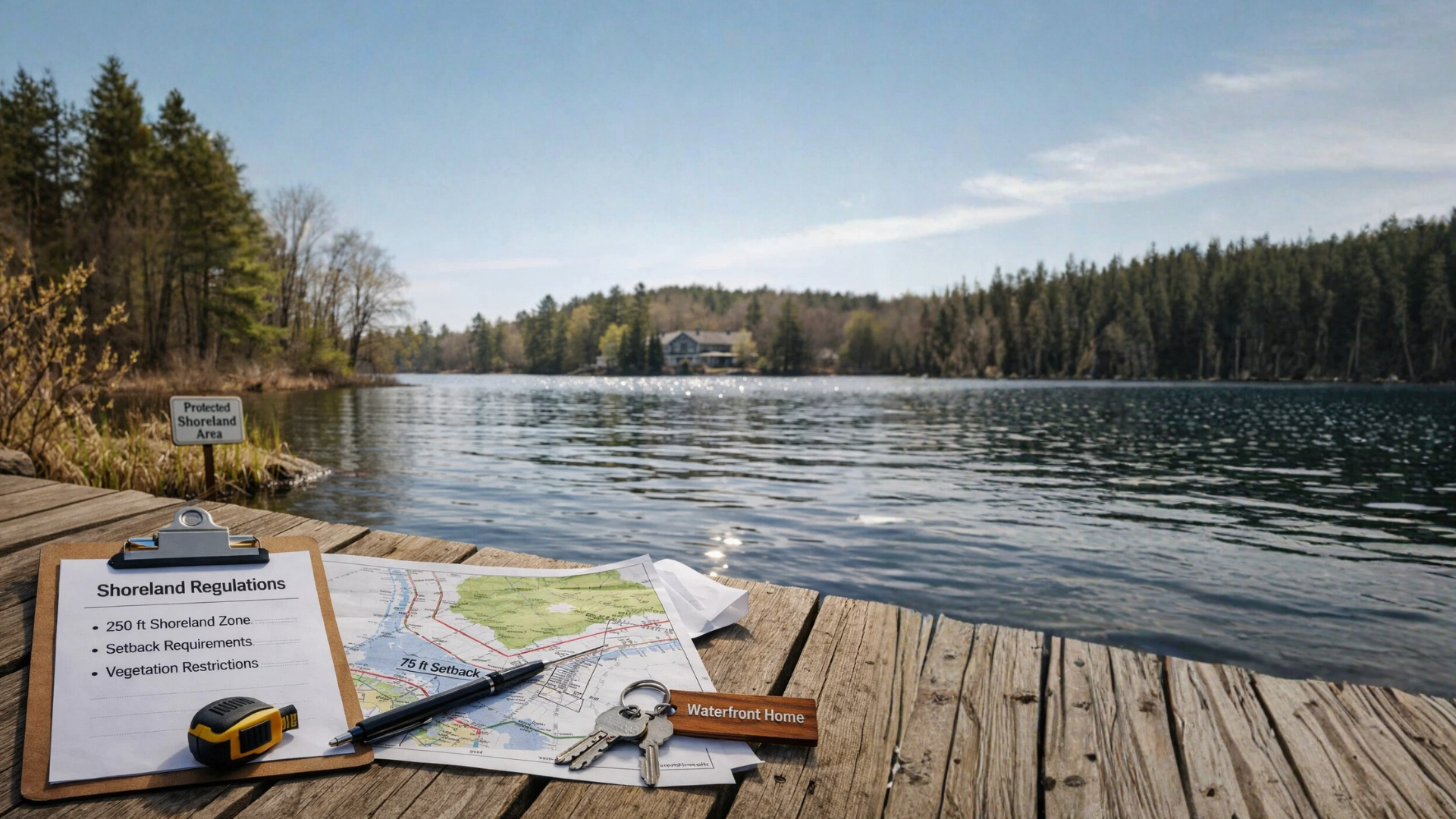
Waterfront properties come with regulations. Here’s what buyers should know about shoreline setbacks, vegetation buffers, and septic system requirements.
Waterfront homes are some of the most desirable properties in the Concord area. But if you’re thinking about buying waterfront property in New Hampshire, there are a few important regulations to understand before making an offer.
Most waterfront homes in New Hampshire fall under the New Hampshire Shoreland Water Quality Protection Act, which sets rules for building setbacks, vegetation buffers, and septic system requirements near lakes, ponds, and rivers. These regulations are designed to protect water quality while still allowing responsible development near public waters.
As spring approaches and interest in Concord, NH waterfront homes increases, many buyers ask the same question: what rules apply when you own property on the water?
Waterfront properties in Concord do come with a few additional regulations, but once you understand how they work, they’re usually more straightforward than people expect.
Here are three of the most important rules buyers should know.
The Shoreland Water Quality Protection Act
Most waterfront properties in Concord, New Hampshire, fall under the New Hampshire Shoreland Water Quality Protection Act.
This law applies to protected shoreland, which generally includes land within 250 feet of certain water bodies, including lakes and ponds larger than 10 acres, rivers, and streams.
Because of that, one of the first steps when evaluating a Concord waterfront property is determining whether the water body is considered protected under the act. If it is, the shoreland regulations apply to the land within that 250-foot zone.
If a property falls within the protected shoreland area, there are specific rules that guide how development, landscaping, and septic systems can be managed.
1. Waterfront Building Setbacks in Concord, NH
One of the most important regulations involves building setbacks from the shoreline.
Under the Shoreland Protection Act, primary structures such as homes must generally be set back at least 50 feet from the shoreline reference line.
These rules are designed to:
- Reduce erosion
- Limit stormwater runoff into lakes and rivers
- Preserve the natural shoreline environment
In some situations, local Concord zoning regulations may require setbacks that are even stricter than state standards, so both sets of rules must be considered when evaluating a waterfront property.
Another factor buyers should understand is impervious surface coverage. Impervious surfaces are materials that prevent water from soaking into the ground, such as:
- Roofs
- Driveways
- Patios
- Walkways
Because these surfaces can increase runoff into nearby water bodies, the Shoreland Act places limits on how much impervious coverage is allowed within protected shoreland areas. These limits help reduce pollutants entering New Hampshire lakes and rivers.
Waterfront regulations exist to protect the lakes, rivers, and ponds that make these properties so desirable.
"Waterfront regulations exist to protect the lakes, rivers, and ponds that make these properties so desirable."
2. Shoreline Vegetation Buffer Rules in Concord, NH
When planning for a waterfront property in Concord, it’s also important to understand how shoreline vegetation can be managed.
The shoreline buffer area is divided into zones with different rules.
Within the first 50 feet from the shoreline, often referred to as the waterfront buffer, natural vegetation and ground cover generally need to remain intact. Tree and plant removal is very limited, although a small path to the water, typically around six feet wide, is usually permitted.
Between 50 and 150 feet from the shoreline, there is more flexibility, but at least 25% of the area must remain in natural woodland. This means maintaining trees, shrubs, and ground cover in their natural state within part of the buffer zone.
These shoreline buffers help:
- Stabilize soil
- Reduce erosion
- Filter runoff before it reaches the water
There are also restrictions on fertilizer use. Under New Hampshire shoreland rules, fertilizer cannot be applied within 25 feet of public waters because nutrients such as phosphorus and nitrogen can contribute to algae growth and water quality issues in lakes and ponds.
Beyond that distance, certain controlled-release fertilizers may be allowed, but the overall goal is to prevent excess nutrients from entering nearby water bodies.
3. Septic Inspection Rules for Waterfront Property Transfers in NH
Septic systems are another area that often raises questions for waterfront buyers.
As of 2024, New Hampshire law requires that septic systems within the protected shoreland be evaluated by a licensed septic system evaluator when the property is transferred.
This evaluation requirement typically applies when a septic system is located within 250 feet of a lake, pond, river, or other protected water body.
In most cases, this means the buyer will arrange for a septic inspection before closing. If the system is determined to be failing, it must be replaced within 180 days of the property transfer.
In some situations, an additional review may also be required. This typically occurs if:
- There is no septic plan on file
- The system was approved prior to 1989
- The system was never approved by the state
In those cases, a septic designer may need to evaluate the system to confirm that it meets current New Hampshire standards.
These rules were introduced to help reduce nutrient pollution and bacteria entering lakes and rivers from older or failing septic systems.
Understanding What Is Possible with Waterfront Property
At first glance, waterfront property regulations in Concord, NH can sound complicated. In reality, most of these rules are focused on protecting the lakes, rivers, and ponds that make waterfront living so appealing in the first place.
Once buyers understand how the Shoreland Water Quality Protection Act, shoreline vegetation rules, and septic requirements work together, it becomes much easier to evaluate a waterfront property and move forward with confidence.
Working with a local real estate team that understands New Hampshire waterfront regulations can make the process significantly easier.
Ready to Explore Waterfront Homes in Concord, NH?
If you are thinking about buying waterfront property in Concord, NH, this spring or summer, it helps to work with a team that understands shoreline regulations, septic requirements, and local zoning rules.
The Hvizda Realty Group has helped buyers navigate New Hampshire waterfront property regulations and evaluate shoreline properties throughout the Concord area.
Visit hvizdateam.com to explore available properties and learn more about what’s possible with waterfront homes in Concord. Reach out today by calling 603-557-6661 or emailing us at operations@hvizdateam.com, and we’ll help you confidently find the right waterfront property for you.

Ryan Hvizda
Owner | Hvizda Realty Group | eXp
or another way